
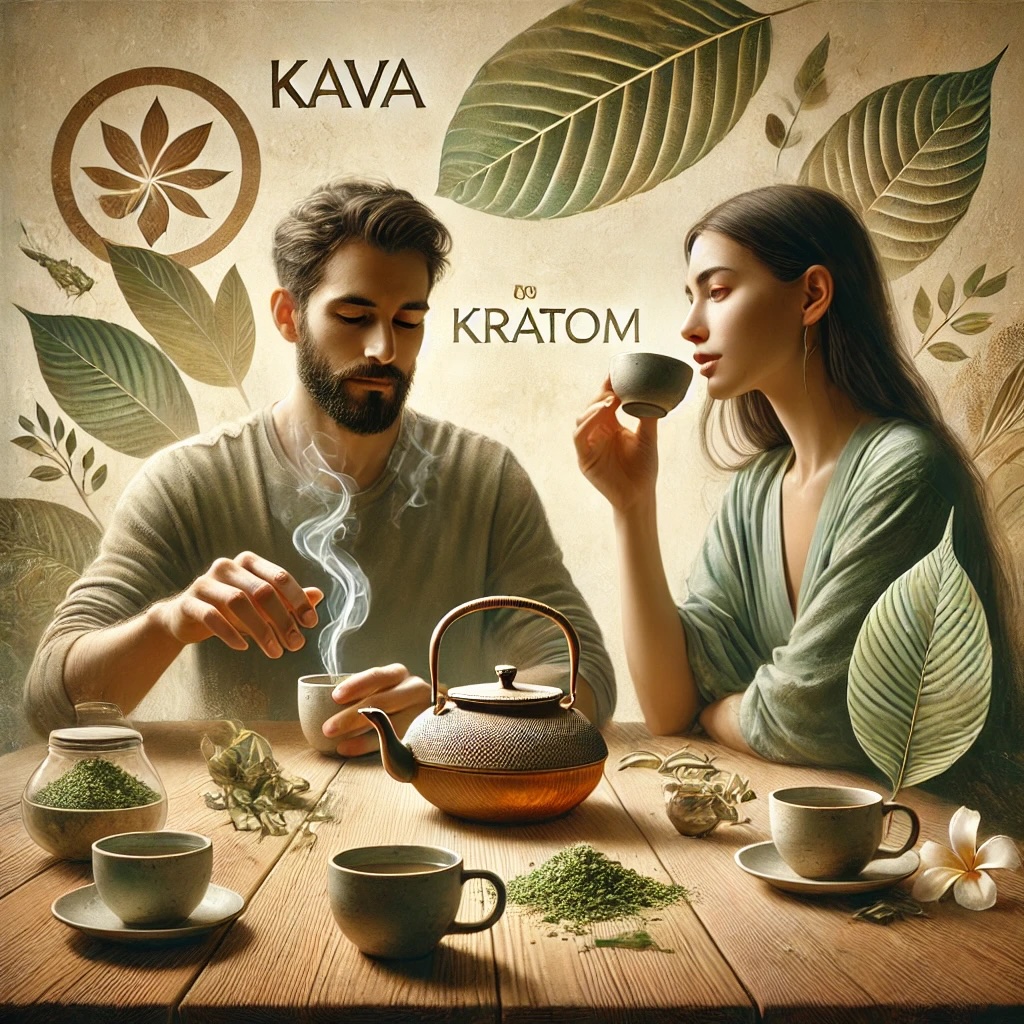
Kava and kratom have distinct psychoactive effects due to their different active compounds.
Kava is a plant native to the South Pacific islands, comes from the root of the Piper methysticum plant.
The active ingredients in kava are called kavalactones. These compounds are responsible for the relaxing effects of kava, including its ability to reduce anxiety, promote relaxation, and even provide mild pain relief. The effects are generally mild and do not typically lead to euphoria.
There are several different kavalactones in the kava plant, with the most prominent being kavain, dihydrokavain, yangonin, desmethoxyyangonin, methysticin, and dihydromethysticin.
Kava is generally not considered physically addictive. It does not lead to physical dependence, meaning you won’t experience withdrawal symptoms if you stop using it but some people have developed a psychological dependence, particularly if they’ve used it regularly as a way to cope with stress or anxiety.
It’s worth noting that kava can have some risks, especially if consumed in large quantities or over long periods. Excessive use has been linked to liver damage, which has led to it being banned or restricted in some countries. It can also interact with other medications, particularly those that affect the liver or have sedative effects.
Kava is used recreationally and as a supplement with a niche market centered around its relaxing effects. In some parts of the United States, particularly in Florida, California, and Hawaii, kava bars have become popular. People can drink kava in a setting similar to a coffee shop or bar, but with a focus on relaxation rather than alcohol consumption.
Some products sold as natural remedies for stress, anxiety, and insomnia contain kava as one of their active ingredients. They are available as over-the-counter supplements. They come in various forms, including capsules, tinctures, and teas.
The FDA has issued warnings about the risk of liver injury associated with kava, leading to some caution in its use and marketing.
Kava in the Context of Addiction Recovery
There are potential risks for someone in recovery. Consuming substances that alter mood or consciousness, like kava, can be risky. While kava is not physically addictive in the way alcohol or opioids are, its use could potentially lead to psychological dependence or trigger cravings for other substances, especially if used as a coping mechanism for stress or anxiety.
Gateway Drug Concerns: The term “gateway drug” typically refers to substances that might lead someone to experiment with more dangerous drugs. While kava itself is not highly addictive, the concern is that using it might lower inhibitions or lead to a desire for stronger substances, especially in someone with a history of addiction.
Different recovery programs and philosophies have varying stances on the use of substances like kava. For instance, traditional programs like Alcoholics Anonymous (AA) advocate complete abstinence from all mind-altering substances, while others are more flexible. Those involved in 12-step recovery programs believe that any substance with psychoactive effects should be avoided in recovery, as it might jeopardize sobriety. Others argue that kava can be a safer alternative for managing anxiety or stress without resorting to alcohol or illicit drugs.
Whether kava is appropriate for someone in recovery depends on their personal history and triggers. If a person has abused substances to cope with stress or anxiety in the past, using kava pose a higher risk. It is a good idea to be cautious and consult with your sponsor, therapist or physician before ingesting kava.
While Kava and Kratom sound similar and are often confused for each other, they have notable differences that should be considered before taking either
Kratom is derived from the leaves of the Mitragyna speciosa tree, which is native to Southeast Asia.
The active ingredients in kratom are alkaloids, with the most notable being mitragynine and 7-hydroxymitragynine.
It has more varied effects depending on the dose. At low doses, it acts as a stimulant, increasing energy and alertness. At higher doses, it has sedative effects similar to opioids, providing pain relief and potentially leading to euphoria. Because of these effects, it is prone to abuse. Users can develop tolerance, dependence, and withdrawal symptoms similar to those seen with opioids.
Kratom’s legal status is complicated. It is legal in most parts of the United States, though some states and municipalities have banned it. The FDA has issued warnings about the risks, particularly its potential for abuse and addiction. It can also cause side effects like nausea, constipation, and, in severe cases, respiratory depression, particularly at high doses.
Kratom users, like kava users risk liver toxicity. There are several case reports in the medical literature of individuals experiencing liver toxicity after using kratom. In some cases, the liver damage was reversible after discontinuation, but in severe cases, it required more intensive medical intervention.
A report from The U.S. Centers for Disease Control and Prevention’s (CDC) Morbidity and Mortality Weekly Report (MMWR) indicated that there were about 1,800 kratom-related emergency department visits between July 2016 and December 2017, with 7.4% involving life-threatening signs or requiring medical intervention. Most of these cases involved male individuals, and about half of the visits involved kratom as the only substance.
They also reported 91 kratom-related deaths during this period, although most of these deaths involved other substances in addition to kratom.
Kratom is most commonly consumed as tea, in capsules, or via the toss and wash method (taking a spoonful of kratom powder and placing it directly into the mouth, then quickly washing it down with water or another beverage). Capsules and extracts offer convenience and potency, while tea and food/drink mixtures can make the experience more palatable.
Some users mix kratom powder into foods like yogurt, applesauce, or smoothies to mask the taste. Others may mix it with juice or coffee.
In Southeast Asia, where kratom trees grow naturally, people sometimes chew fresh kratom leaves directly. this uncommon in the United States due to the difficulty of accessing fresh leaves.
Kava and kratom are often mentioned together due to their use as natural, plant-based substances with psychoactive effects, but they are quite different in terms of their chemical composition and effects.
Specific numbers on kava-related ER visits are not widely available, but the general consensus is that kava carries a lower risk of acute health events leading to ER visits compared to kratom. Concerns are more focused on long-term use and liver health.
From a recovery perspective, the safest approach is to avoid these substances. Kava seems to be the lesser of the two in terms of affecting a sober person’s mindset since it does not create the euphoria presented when taking kratom.
A truly sober person who has experienced the hell of addiction would logically question themselves as to why would they risk returning to that way of life. The juice isn’t worth the squeeze.